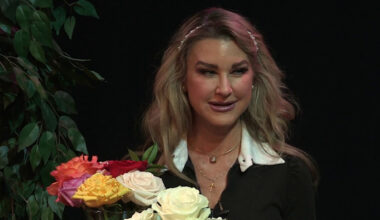
Basic Information
| Field | Details |
|---|---|
| Name | Leeann Womack |
| Widely known as | Lee Ann Womack |
| Birth date | August 19, 1966 |
| Birthplace | Jacksonville, Texas |
| Occupation | Country singer, songwriter |
| Breakthrough song | “I Hope You Dance” |
| Known for | Traditional country sound, crossover success, roots driven albums |
| Spouse | Frank Liddell |
| Former spouse | Jason Sellers |
| Children | Aubrie Sellers, Anna Lise Liddell |
A Voice That Moved Like Weather
Leeann Womack caught my attention because her voice was never hurried. It came patiently, like a river seeking its bed. She was born in Jacksonville, Texas, on August 19, 1966, when country music was not decoration. This was atmosphere. Weather was everyday. Her parents, Aubrey Lee Womack, a school administrator and radio DJ, and Ann Womack, a teacher. Her home was disciplined and musical, an uncommon mix.
Leeann did not stumble into country music. After attending South Plains Junior College and Belmont in Nashville, she interned at MCA Records in A&R. She learned the business before the spotlight discovered her, so that path important. Not just a singer waiting for luck. She studied the machine, music, and moment.
The Breakthrough That Changed Everything
Her 1997 debut album introduced a strong traditional country presence, but the real turning point came with the 2000 album I Hope You Dance. The title song became her signature and pushed her into a much wider audience. It was one of those rare songs that feels personal and public at the same time, like a letter read aloud on a stage. The album also carried major chart and award momentum, and it became the kind of record that keeps breathing long after release week is gone.
The song did not just make her famous. It gave her a permanent place in country music history. She later won the CMA Single of the Year award for it, and her broader awards list includes multiple CMA and ACM nominations and wins. Her Grammy profile also notes her Grammy win for “Mendocino County Line” with Willie Nelson, which showed that her voice could move easily between mainstream country and older, earthier forms.
Career Depth and Artistic Range
I find Leeann most interesting when she leans away from polish and toward grit. Albums such as The Way I’m Livin’ and The Lonely, the Lonesome & the Gone pushed deeper into roots music, Americana, soul, and classic country textures. These records feel like weathered wood and porch light. They are less about chasing radio formulas and more about serving the song. That artistic shift was not a retreat. It was a sharpening.
Her work also carries a strong awards record. The official awards page lists major milestones, including CMA Female Vocalist of the Year and CMA Album of the Year for There’s More Where That Came From. Her Grammy record and Country Music Association history place her among the most decorated female country singers of her generation.
Leeann’s net worth is commonly estimated by third party entertainment finance sites at around $20 million, though that figure is not official. I treat that as a rough estimate rather than a settled fact.
Family Roots and Personal Relationships
I think her family history helps explain the emotional grain in her music. Leeann’s parents mattered greatly to her development.
Aubrey Lee Womack, her father, was a school principal and a radio DJ. He gave her access to music at an early age, and that access was not passive. It was hands on. A child who grows up around records, broadcast booths, and voices in motion learns that songs are living things. That early environment helped shape her ear for phrasing and classic country tone.
Ann Womack, her mother, worked as a schoolteacher. That detail may sound simple, but it suggests structure, patience, and a respect for learning. Leeann did not emerge from chaos. She came from a home where attention and discipline likely mattered. That kind of background often leaves a mark on an artist who values emotional control as much as emotional release.
She also has an older sister, who is described in public biographical material as an attorney in Houston. Her name is not consistently published, so I do not want to force certainty where the record is uneven.
Her marriages and children are central to the family story.
Jason Sellers was her first husband and a fellow musician. They married in 1990 and later divorced. Their daughter, Aubrie Sellers, became a singer-songwriter herself. That makes the family story feel cyclical, almost like a melody that returns in a new key. Aubrie inherited not just a name, but a lane.
Frank Liddell is her husband and long-time collaborator. He has been closely tied to her later albums, especially the more roots driven material. Their partnership looks both personal and artistic, which can be powerful when handled well. In 2024, Leeann publicly marked 24 years of marriage, and her current official site still identifies him as her husband.
Their younger daughter is Anna Lise Liddell, also seen in some public sources as Annalise Liddell. She has appeared in Leeann related music credits and has maintained a public presence online. She is part of the newer branch of the family story, one that connects private life to public art in a quiet, modern way.
Recent Activity and Public Presence
Recent years have seen Leeann active. Her official site and social media accounts promoted I Hope You Dance’s extensive history and anticipated county event appearances in 2025 and 2026. That proves she is more than a historical figure. She remains visible and active.
I also observe how often her music is mentioned in related artist, anniversary, and tribute performance conversations. That presence is hard to fake. It means the catalog is hot. It indicates repeat listeners. The music shines like a field lantern.
Extended Timeline
1966 to 1989
Leeann Womack was born in Jacksonville, Texas, on August 19, 1966. She grew up in a music rich home and later studied in Texas and at Belmont in Nashville before moving into the industry side of music through an MCA internship. Those early years built the frame for everything that followed.
1990 to 1999
In 1990, she married Jason Sellers. In the 1990s, she signed with Decca Nashville, released her debut album in 1997, and began building a reputation as a strong, no-nonsense country vocalist. By the end of the decade, she had already become a serious figure in Nashville.
2000 to 2005
The year 2000 changed her life. I Hope You Dance became a landmark hit and expanded her audience far beyond country radio. The early 2000s brought major award wins, including CMA recognition and a Grammy for her duet with Willie Nelson. In 2005, There’s More Where That Came From reinforced her standing as a major female voice in country music.
2008 to 2013
She continued recording through Call Me Crazy and other projects, keeping her place in the genre while the industry changed around her. During these years, she remained visible as a singer who could still deliver emotional clarity without excess decoration.
2014 to 2017
This period marked her artistic return to roots music. The Way I’m Livin’ and The Lonely, the Lonesome & the Gone deepened her reputation as an artist willing to move away from the center lane and toward more textured, older sounds. These albums showed that maturity can sound bold rather than safe.
2018 to 2026
Her catalog continued to resonate, especially around anniversaries of I Hope You Dance. In recent years she has remained present through official site posts, social media, and live appearances connected to country music events. That ongoing visibility keeps her story active rather than sealed behind nostalgia.
FAQ
Who is Leeann Womack?
Leeann Womack is a country singer and songwriter best known for “I Hope You Dance.” I see her as one of the clearest voices to come out of modern country music, because her style blends emotional restraint with deep feeling.
Who are Leeann Womack’s family members?
Her parents are Aubrey Lee Womack and Ann Womack. Her known immediate family also includes her former husband Jason Sellers, her husband Frank Liddell, and her daughters Aubrie Sellers and Anna Lise Liddell.
What is Leeann Womack best known for?
She is best known for “I Hope You Dance,” one of the defining country songs of its era. I think the song’s power comes from its simplicity. It sounds like wisdom spoken in a single breath.
Did Leeann Womack change her musical style over time?
Yes. Her later work moved more strongly into roots, Americana, and classic country textures. That shift gave her catalog more depth and showed she was not trapped inside one commercial era.
Is Leeann Womack still active?
Yes. Her recent official site updates and social posts show continued activity, including appearances, anniversary celebrations, and new music related mentions in 2025 and 2026.