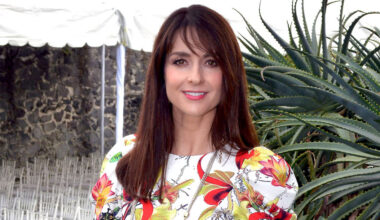
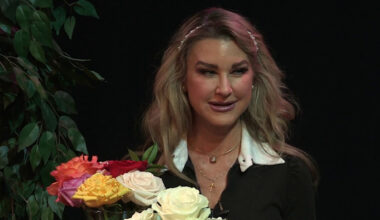
Basic Information About Jamillah Muhammad
Jamillah Muhammad, also commonly spelled Jamilah Muhammad, is best known as the older sister of Olympic champion Dalilah Muhammad, one of the most accomplished American athletes in the 400 meter hurdles. Unlike her famous younger sister, Jamillah has maintained a largely private life, with only limited information available about her personal background, education, and professional journey.
What makes her story interesting is the family environment she shares with Dalilah. Their upbringing in Queens, New York, was shaped by faith, education, discipline, and public service. These values became important threads in the family’s identity, influencing the different paths taken by its members.
Jamillah has been described as a teacher and has also been associated with employment at the New York City Department of Correction. Although she has not established an extensive public profile of her own, her background offers a glimpse into the household that helped nurture an Olympic champion.
| Category | Details |
|---|---|
| Full name | Jamillah Muhammad |
| Alternative spelling | Jamilah Muhammad |
| Known for | Being the older sister of Dalilah Muhammad |
| Nationality | American |
| Place of upbringing | Rochdale Village, Queens, New York |
| Father | Askia Muhammad |
| Mother | Nadirah Muhammad |
| Brother | Hassan Muhammad |
| Sister | Dalilah Muhammad |
| Reported professions | Teacher and former correctional officer |
| Religion of family | Islam |
| Date of birth | Not publicly confirmed |
| Marital status | Not publicly documented |
| Net worth | Not publicly available |
I find that Jamillah’s story is best understood through the broader family history rather than through speculation about her private life. The available details reveal a woman whose reported professional experience reflects the practical, service-oriented values associated with her upbringing.
Growing Up in Rochdale Village Queens
Rochdale Village, a Queens residential cooperative in Jamaica, was Jamillah Muhammad’s hometown. The Muhammad family’s identity was shaped by the neighborhood, where family, community, and religion interacted.
Strong Muslim beliefs shaped the household. The mosque was a site of worship, study, and community connection, making religious practice a daily aspect of family life. Her parents stressed education, responsibility, and assisting others.
Growing up in this setting exposed the Muhammad children to numerous service models. Their father worked in religious and penitentiary settings, while their mother helped child welfare households. Professional duties could reflect personal ideals, as both parents held rigorous public service posts.
With her siblings, Jamillah experienced this. International sporting prowess has drawn attention to Dalilah, but her family narrative goes beyond the track. It encompasses the quieter work of career growth, family support, and community service.
Rochdale Village helped Dalilah’s athletic development. In celebration of her Olympic success, the neighborhood showed their pride in a local athlete.
Askia Muhammad as Her Father
Askia Muhammad is Jamillah’s father and an imam who has spent many years working in correctional settings in New York City. His professional responsibilities have included serving as an administrative chaplain for Islamic Affairs within the city’s Department of Correction.
His work has involved supporting Islamic programs in correctional facilities, providing religious guidance, counseling individuals, and participating in efforts centered on rehabilitation. Working in such an environment requires patience, emotional steadiness, and an understanding of people from different backgrounds.
Askia’s professional life reflects the family’s emphasis on faith and public service. His role also demonstrates that religious leadership can extend beyond a mosque into institutions where people may be facing difficult circumstances.
As a father, he helped create an environment in which his children could pursue their interests while remaining connected to their values. Dalilah’s athletic career required substantial commitment from the entire household, including the practical support necessary to attend competitions and continue training.
Askia has spoken about the importance of community involvement in raising children. His perspective reflects a broader idea that achievement rarely develops in isolation. Behind a successful individual is often a network of relatives, mentors, neighbors, and institutions that provide encouragement along the way.
For Jamillah, growing up with a father whose career centered on religious guidance and rehabilitation meant that public service was a visible part of everyday family life.
Nadirah Muhammad as Her Mother
Nadirah Muhammad, sometimes spelled Nadriah Muhammad, is Jamillah’s mother. She has worked as a Child Protective Specialist with the New York City Administration for Children’s Services, a role involving the assessment and monitoring of families involved in the child welfare system.
The work demands attention to detail, patience, and the ability to navigate complicated family circumstances. Child protective specialists may need to evaluate whether children are safe, communicate with parents, and help ensure that court-directed requirements are followed.
Nadirah’s professional responsibilities placed her in a position where family welfare and personal accountability were central concerns. Those same themes were important in the household she raised with Askia.
She also played a significant role in Dalilah’s athletic development. Initially, Nadirah had concerns about her daughter’s participation in hurdles because of the risk of injury. Hurdles demand speed, coordination, and precise timing, and an athlete can suffer a serious fall when approaching an obstacle incorrectly.
Over time, however, she became a supporter of Dalilah’s ambitions. Her involvement illustrates a familiar parental balancing act: protecting a child from potential harm while recognizing that growth often requires taking carefully considered risks.
For Jamillah, Nadirah’s example offered a model of professional responsibility and dedication. Her mother’s career also reinforces the family’s connection to public service, where much of the work happens away from the spotlight but can have lasting effects on individuals and communities.
Hassan Muhammad and His Role in the Family
Hassan Muhammad is Jamillah’s brother and one of Dalilah’s older siblings. He has been identified as a sergeant in the United States Army.
His military career represents another form of service within the family. While Askia’s work focuses on religious guidance and rehabilitation and Nadirah’s career centers on child welfare, Hassan’s reported military position places him within an institution associated with national defense and structured responsibility.
The siblings grew up in the same Queens household, sharing the influence of their parents and the community around them. Their professional paths differ, but their reported careers connect with the family’s broader emphasis on discipline and commitment.
Detailed information about Hassan’s military assignments, service history, and personal life is limited in public accounts. Similarly, little has been documented about the private relationship between Hassan and Jamillah beyond their family connection.
Nevertheless, his place in the family helps illustrate that the Muhammad household was not organized around athletics alone. Its members pursued different responsibilities, and Dalilah’s achievements became one highly visible part of a much wider family story.
Dalilah Muhammad and Her Olympic Journey
Jamillah’s younger sister Dalilah Muhammad made the Muhammad name famous through track and field.
Dalilah, born February 7, 1990, in Jamaica, Queens, became a top 400-meter hurdler. Olympic gold and silver medals, world championships, and a world record in her event among her accomplishments.
Her success came from years of training, competition, and technical advancement. The 400 meter hurdles requires sprint speed and precision to clear ten hurdles in one lap. For top-level competition, athletes must balance stride pattern, endurance, and rhythm while retaining speed.
Major Dalilah accomplishments:
Winner of the 2016 Rio Olympics women’s 400-meter hurdles gold medal.
World title and 52.16-second record in 2019 World Athletics Championships.
Won silver in individual 400 meter hurdles and gold in the US women’s 4 x 400 meter relay at the 2020 Tokyo Olympics in 2021.
International championships: Represented the US in top track & field.
Her 2016 Olympic gold defined her career and hometown. Years of preparation paid off as she became one of the world’s top athletes.
Due to her childhood track and field attempts, Jamillah’s relationship to Dalilah is noteworthy. Dalilah recalls her older sister attending one practice before quitting. The story shows a humorous contrast between the sisters’ paths.
One sister quit immediately, while the other became an Olympic champion. Their decisions show how siblings reared together can develop distinct interests and goals.
People that helped Dalilah gained prominence after her public breakthrough. Despite living separate lives from her sports career, her parents and siblings were part of the story.
Jamillah Muhammad’s Education and Professional Career
Jamillah has been described as a teacher in accounts discussing Dalilah’s family. Some reports also connect her with the New York City Department of Correction, where she reportedly worked as a correction officer beginning around September 2012.
These details suggest a professional life shaped by education and public service. However, the available information does not establish a complete employment history, including the exact dates of every position, the institutions where she may have taught, or her academic qualifications.
Her reported work in corrections would have involved responsibilities different from those of her parents. Correction officers generally help maintain safety and security within detention facilities, supervise people in custody, and follow institutional procedures.
Public payroll information associated with a person of the same name has indicated base compensation rising into the mid-$80,000 range in later years of the recorded employment. Such figures should be treated as historical salary information rather than proof of current employment or a comprehensive picture of personal finances.
It is also important not to confuse salary with wealth. A person’s financial position depends on expenses, savings, assets, debts, and other circumstances that are not established by public payroll figures.
No independently verified record establishes Jamillah’s current occupation, personal net worth, business ownership, or investment portfolio. Her professional background is therefore best described in terms of the limited reported information rather than assumptions about her present circumstances.
Family Values Faith and Public Service
The Muhammad family’s story brings together several themes: religious faith, professional responsibility, education, and the importance of community.
Askia’s work as an imam and correctional chaplain reflects religious service. Nadirah’s child welfare career focuses on the protection of children and support for families navigating difficult situations. Hassan’s reported military career represents another form of structured public service, while Jamillah’s reported teaching and correctional experience connects her with education and institutional work.
Dalilah’s athletic career follows a different path, but it also requires discipline, persistence, and accountability. Competitive sport is highly visible, yet much of its foundation consists of repetitive training, careful preparation, and support from others.
I see the family’s shared environment as an important part of understanding these different careers. It would be inaccurate to assume that every sibling has identical ambitions simply because they grew up together. Instead, their experiences suggest that a common set of values can support a range of individual choices.
Faith also appears to have played a central role in the family’s sense of identity. Their Muslim upbringing connected religious practice with daily routines and community involvement. This background helps explain why accounts of Dalilah’s childhood often emphasize not only athletic coaching but also the neighborhood and family culture that surrounded her.
The family’s public story is therefore larger than a collection of professional titles. It reflects how a household can encourage different forms of achievement without requiring everyone to follow the same route.
Personal Life and Privacy
Jamillah Muhammad has maintained a low public profile. Unlike Dalilah, she has not become a regular subject of sports interviews, television appearances, or extensive biographical coverage.
There is no reliably established public information confirming her date of birth, spouse, children, or detailed personal milestones. Her current residence and present employment status are also not conclusively documented in the available biographical information.
The absence of these details should not be interpreted as evidence of an unusual personal history. Many people connected to well-known figures choose to live outside public attention, and their private circumstances may never become part of the public record.
The same caution applies to social media. No prominent, independently verified public account can confidently be identified as her official personal profile from the information available here.
Her public identity remains closely connected to her family, particularly Dalilah’s athletic achievements. Beyond those connections, Jamillah appears to have kept the details of her life largely private.
That privacy deserves to be respected. A meaningful family biography does not need to fill every gap with assumptions. It can acknowledge what is known while leaving personal matters undocumented when reliable information is unavailable.
Net Worth and Financial Background
Jamillah Muhammad’s wealth is unknown. There are no credible numbers on her assets, savings, property, investments, or debts.
A accurate wealth assessment is impossible given her reported public service career and scant salary information. Even past wage records are merely one financial snapshot.
In contrast to Dalilah, who has won big championships and the Olympics, her circumstances are different. Elite athletes can earn sponsorships, appearance fees, and other professional deals, but a sibling’s finances should not be affected.
Long-term public service by both parents does not prove the family’s riches.
The best description is Jamillah’s financial condition is confidential. A net worth estimate without credible data is speculative.
Extended Timeline of Jamillah Muhammad and Her Family
| Period or date | Event |
|---|---|
| Childhood | Jamillah grows up in a Muslim household in Rochdale Village, Queens, with her parents and siblings. |
| February 7, 1990 | Her younger sister, Dalilah Muhammad, is born in Jamaica, Queens. |
| Childhood and youth | Dalilah begins exploring sports and eventually develops a serious interest in track and field. Jamillah reportedly tries track briefly as well. |
| Around September 2012 | Public employment information associates a Jamillah Muhammad with work as a correction officer in New York City. |
| 2016 | Dalilah wins Olympic gold in the women’s 400 meter hurdles at the Rio Olympics, bringing international attention to her family and hometown. |
| 2019 | Dalilah sets a world record at the World Athletics Championships and receives further attention in profiles discussing her family background. |
| 2021 | Dalilah wins Olympic silver in the individual hurdles event and gold in the women’s 4 × 400 meter relay at the Tokyo Games. |
| Recent years | Jamillah remains largely outside public attention, with most available references connected to her sister and family background. |
The timeline highlights the difference between a public athletic career and a private family life. Dalilah’s major competition results are clearly dated, while Jamillah’s personal milestones remain less extensively documented.
Frequently Asked Questions
Who is Jamillah Muhammad?
Jamillah Muhammad, also spelled Jamilah Muhammad, is the older sister of American Olympic champion Dalilah Muhammad. She has been described as a teacher and has also been associated with employment as a correction officer in New York City.
Is Jamillah Muhammad related to Dalilah Muhammad?
Yes. Jamillah is Dalilah’s older sister. They grew up in the same Muslim household in Rochdale Village, Queens, New York, alongside their brother Hassan Muhammad.
Who are Jamillah Muhammad’s parents?
Her parents are Askia Muhammad and Nadirah Muhammad. Askia is an imam and longtime correctional chaplain, while Nadirah has worked as a Child Protective Specialist with New York City’s Administration for Children’s Services.
Does Jamillah Muhammad have any siblings besides Dalilah?
Yes. Her brother is Hassan Muhammad, who has been identified as a sergeant in the United States Army. Dalilah is her younger sister and is internationally recognized for her accomplishments in the 400 meter hurdles.
What does Jamillah Muhammad do for a living?
Jamillah has been described as a teacher and has been associated with work as a correction officer for the New York City Department of Correction. Her current occupation and complete employment history have not been conclusively established in publicly available biographical information.
Did Jamillah Muhammad ever participate in track and field?
She reportedly tried track and field briefly as a child. Dalilah has recalled that her older sister attended approximately one practice before quitting. Unlike Dalilah, Jamillah did not pursue a documented elite athletic career.
What is Jamillah Muhammad’s nationality?
Jamillah is described as American and grew up in Queens, New York City. Her family background is associated with African American heritage and a Muslim upbringing.
Is Jamillah Muhammad married, and does she have children?
Reliable public information confirming her marital status or whether she has children is not available. She has kept these aspects of her personal life private.
What is Jamillah Muhammad’s net worth?
Her net worth has not been reliably documented. Historical public employee salary information associated with a person of the same name does not establish her current income, total assets, or overall financial position.
Why is Dalilah Muhammad more widely known than Jamillah?
Dalilah has built an internationally recognized track and field career, winning Olympic medals and a world championship while setting a world record in the 400 meter hurdles. Jamillah has maintained a much lower public profile, with most biographical references mentioning her as part of Dalilah’s family.
What role did family play in Dalilah Muhammad’s success?
Dalilah’s upbringing involved support from her parents, siblings, coaches, and the Rochdale Village community. Her family’s emphasis on discipline, faith, and perseverance helped create an environment in which she could pursue athletics. Her success ultimately depended on her own training and performance, supported by the people around her.
Where did Jamillah Muhammad grow up?
She grew up in Rochdale Village in Queens, New York City. The community and the family’s Muslim faith were important elements of the environment shared by Jamillah, Hassan, and Dalilah during their childhood.