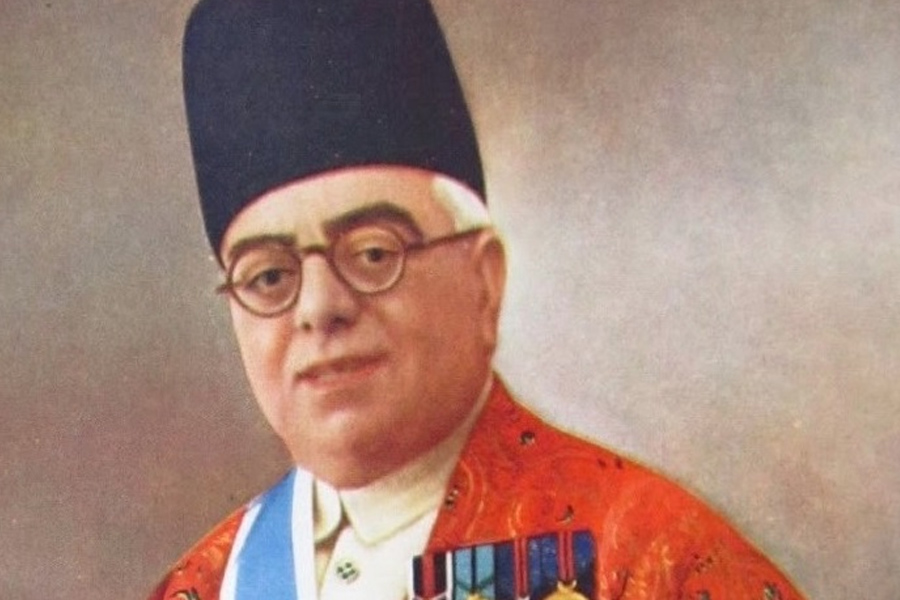
A Statesman in Silk and Steel
I perceive more than a hereditary religious leader in Aga Sultan Mahomed Shah Aga Khan, also known as Sir Sultan Muhammad Shah or Aga Khan III. He bridged empires, faith, reform, and modern politics. Born November 2, 1877, in Karachi, British India, he died July 11, 1957, in Versoix, Switzerland. Life is nearly architectural, built with vision, diplomacy, and restless purpose between those times.
He became the 48th Nizari Ismaili Imam in 1885 after his father, Aga Khan II, died. He was just seven or eight years old. From that early start, he became one of the most powerful Muslim leaders of the late 19th and early 20th centuries. His 72-year Imamat was one of the longest and most impactful in Ismaili history.
His life moved in many worlds at once. He was a spiritual guide, a political organizer, a philanthropist, an international diplomat, and a man comfortable in both royal courts and reform movements. Some figures belong to one nation. Aga Khan III belonged to several conversations at once.
Early Life and Noble Lineage
Aga Sultan Mahomed Shah was born into a devout and noble family. His father was Nizari Ismaili 47th Imam Aga Khan II, commonly known as Aqa Ali Shah. Nawab A’lia Shams al Muluk, a granddaughter of Qajar dynasty ruler Fath Ali Shah, was his mother.
This ancestry mattered. It gave him a heritage tied both to sacred authority and to political refinement. His family line traced back through the Ismaili Imams to the Prophet Muhammad. In him, spiritual descent and worldly influence met like two rivers.
He was educated in elite institutions, including Eton and Cambridge, and this shaped his broad outlook. He learned to move across languages, cultures, and systems of power with unusual ease. That ability would define much of his public life.
Becoming Imam at a Young Age
After Aga Khan II died in 1885, young Sultan Mahomed Shah became Imam. Few childhoods were that significant. His title came with the moral and civic obligation of leading a transnational Muslim community through colonial control, political instability, and modern development.
I find this early transition one of the most striking features of his life. Many leaders grow into duty. He was handed duty before he had fully grown. Over time, however, he made that burden look almost like craft. He redefined leadership by pairing spiritual continuity with practical reform.
His tenure as Imam was marked by a consistent push toward education, social mobility, institutional development, and the improvement of women’s status. He believed faith should not stand still like a portrait on a wall. It had to breathe, adapt, and build.
A Political Voice in British India
Aga Khan III played a major role in Muslim political awakening in British India. He supported Muslim education and collective political organization at a time when representation, rights, and identity were being fiercely debated.
He was closely linked with the Aligarh Movement, which aimed to advance modern education among Muslims. He also played a leading role in the Simla Deputation of 1906, a landmark political moment in which Muslim leaders sought recognition of their political interests from the British administration.
He founded and was the first permanent president of the All India Muslim League. He expressed Muslim political concerns in a changing India. His effect went beyond talks. He established structures, networks, and objectives that fueled the 1947 Pakistan movement.
For many, he remains one of the intellectual and political architects behind Muslim constitutional thought in South Asia.
International Leadership and World Affairs
His public life extended beyond India. Aga Khan III confidently asserted himself internationally. He was League of Nations president in 1937 and 1938. He was at the center of pre-WWII diplomacy, when the world was shaking under opposing ideologies, disintegrating empires, and mounting violence.
He advocated peace, dialogue, and international cooperation. Though the League itself struggled against the storms of its time, his presidency reflected the global respect he commanded. He was not simply a religious dignitary invited into politics. He was a political figure in his own right.
His life often seemed to move like a bridge suspended between continents, connecting India, Europe, the Middle East, and Africa.
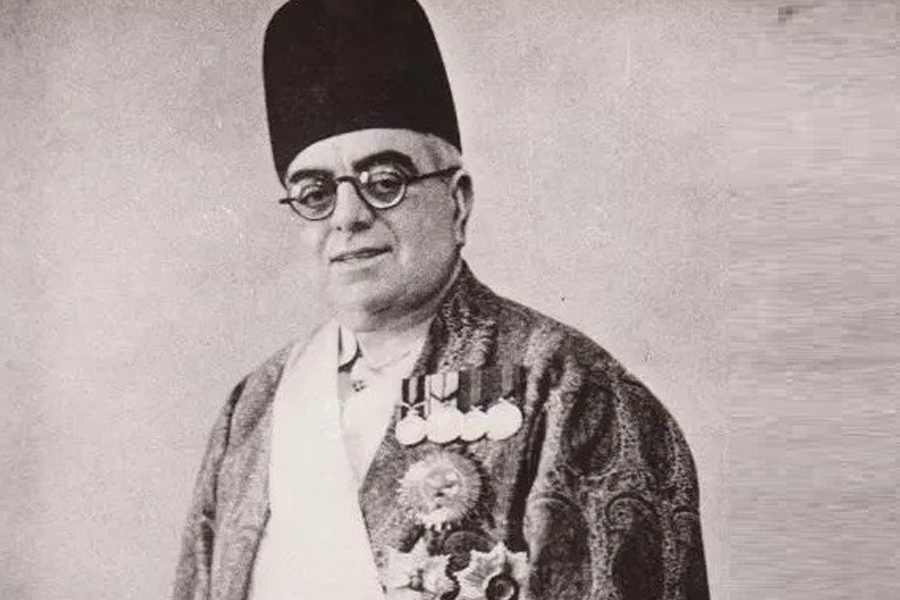
Reforms, Modernization, and Community Building
Reform characterized his 72 Imamat years. He promoted education at all levels and stressed girls’ education and women’s social growth. He believed progress and faith could coexist at a period when many communities were struggling with tradition and modernization.
He encouraged better health systems, local organization, social discipline, and economic self reliance. He supported institutions that laid the groundwork for the development ethos later expanded by his successors. The spirit behind many later Ismaili institutions can be traced to his vision.
He also insisted that the Ismaili community should be prepared for a modern world shaped by law, finance, education, and civic responsibility. In this sense, he did not simply preserve a community. He trained it for the future.
A Cosmopolitan Personality
Aga Khan III was noted for his worldly lifestyle, notably horse racing and breeding. Europeans and Asians knew him from his exclusive international circles. His worldly elegance did not obscure his religious office. Instead, its public image captivated its time.
Some leaders retreat into ceremony. He stepped into modernity wearing it like a tailored coat. His life suggested that spiritual authority and worldly sophistication could coexist, even if not without controversy.
He also wrote and reflected on his experiences, leaving behind a portrait of a man who was intellectually alert, politically seasoned, and fully aware of the historical currents around him.
Family Background and Parents
His parents formed the foundation of his early identity.
| Family Member | Relationship | Notes |
|---|---|---|
| Aga Khan II, Aqa Ali Shah | Father | 47th Imam of the Nizari Ismailis |
| Nawab A’lia Shams al Muluk | Mother | From the Qajar royal line, granddaughter of Fath Ali Shah |
Through his father, he inherited the office of Imam. Through his mother, he inherited a Persian aristocratic heritage that enriched the cultural environment around him.
Wives and Marriages
His personal life was layered and international, reflecting both tradition and the changing social world of the early 20th century.
Shahzadi Begum
He married Shahzadi Begum in 1896 in Pune, India. She was his first cousin and the granddaughter of Aga Khan I. This marriage reflected family continuity and dynastic custom. It is not prominently associated with surviving children in most public accounts.
Cleope Teresa Magliano
In 1908, he married Cleope Teresa Magliano, an Italian ballerina. This marriage revealed another side of his life, one that crossed cultural boundaries with ease. She was the mother of two sons, including Prince Aly Khan. She died in 1926.
Andrée Joséphine Carron
He later married Andrée Joséphine Carron, a Frenchwoman known in society as Andrée Aga Khan. Their marriage is generally placed around the late 1920s or early 1930s. They later divorced in 1943. Their son was Prince Sadruddin Aga Khan.
Begum Aga Khan III, Om Habibeh
In 1944, he married Yvonne Blanche Labrousse, the French beauty queen who became Om Habibeh Begum Aga Khan after converting to Islam. She remained an important figure in community affairs and in preserving his memory after his death. She died in 2000.
Children and Descendants
His children carried the family legacy into diplomacy, philanthropy, and leadership.
| Child | Mother | Birth and Death | Notes |
|---|---|---|---|
| Prince Giuseppe Mahdi Khan | Cleope Teresa Magliano | circa 1909 to 1911 | Died in infancy or early childhood |
| Prince Aly Khan | Cleope Teresa Magliano | 1911 to 1960 | Diplomat, social figure, father of Aga Khan IV |
| Prince Sadruddin Aga Khan | Andrée Joséphine Carron | 1933 to 2003 | International humanitarian, UN High Commissioner for Refugees |
One of the family’s most prominent members was Prince Aly Khan. Through him, Aga Khan III became the grandfather of 1936-born Prince Karim al Husseini, Aga Khan IV, the 49th Imam. Later descendants included members of a large, transnational family network.
One of the most important acts of succession came at the end of Aga Khan III’s life. Instead of passing the Imamat to his son Aly Khan, he designated his grandson Karim as successor. This decision shaped the future of the Ismaili community in profound ways.
Final Years and Burial
Aga Khan III died on July 11, 1957, in Versoix, Switzerland. In accordance with his wishes, he was later buried in Aswan, Egypt, in 1959. His mausoleum there remains an important site of remembrance.
Even in death, geography followed him. Karachi, India, Europe, Geneva, Aswan. His life never belonged to one place alone.
Key Dates at a Glance
| Year | Event |
|---|---|
| 1877 | Born in Karachi on November 2 |
| 1885 | Succeeds as 48th Imam |
| 1896 | Marries Shahzadi Begum |
| 1906 | Leads role in Simla Deputation |
| 1906 to 1907 | Associated with founding of All India Muslim League |
| 1908 | Marries Cleope Teresa Magliano |
| 1911 | Birth of Prince Aly Khan |
| 1933 | Birth of Prince Sadruddin Aga Khan |
| 1937 to 1938 | President of the League of Nations |
| 1944 | Marries Yvonne Labrousse, Om Habibeh |
| 1957 | Dies in Switzerland on July 11 |
FAQ
Who was Aga Sultan Mahomed Shah Aga Khan?
What made him historically important?
He was the 48th Imam of the Nizari Ismaili Muslims, a major Muslim political leader in British India, a champion of education and reform, and President of the League of Nations in 1937 and 1938. His influence touched religion, politics, diplomacy, and philanthropy.
Who were his parents?
What was his family background?
His father was Aga Khan II, the 47th Imam, and his mother was Nawab A’lia Shams al Muluk, who came from the Qajar royal family of Persia. He inherited both spiritual rank and aristocratic lineage.
How long was his Imamat?
How many years did he serve as Imam?
He served as Imam for 72 years, from 1885 until his death in 1957. This was one of the longest and most consequential periods of leadership in Ismaili history.
How was he connected to the Muslim League?
What role did he play in Indian Muslim politics?
He helped shape Muslim political organization in British India, supported the Simla Deputation in 1906, and served as the first permanent president of the All India Muslim League. He was a key early voice in Muslim constitutional politics.
Who were his wives?
How many times was he married?
He had four well known marriages: Shahzadi Begum, Cleope Teresa Magliano, Andrée Joséphine Carron, and Yvonne Blanche Labrousse, who became Om Habibeh Begum Aga Khan.
Who were his children?
Which family members carried forward his legacy?
His known sons included Prince Giuseppe Mahdi Khan, who died very young, Prince Aly Khan, and Prince Sadruddin Aga Khan. Through Prince Aly Khan, he became the grandfather of Aga Khan IV, Prince Karim al Husseini.
Why did Aga Khan IV succeed him instead of his son?
Was the succession unusual?
Yes, it was notable. Aga Khan III chose his grandson Karim as his successor, making him Aga Khan IV in 1957. This decision reflected his judgment about the needs of the community in a new age.
What was his broader legacy?
Why does he still matter today?
He helped shape a modern Ismaili identity rooted in education, discipline, pluralism, and service. He also left a mark on South Asian Muslim politics and international diplomacy. His legacy still lives through institutions, family continuity, and the ideas he advanced.