Basic Information
| Field | Detail |
|---|---|
| Full name | Andrew Samuel Griffith Jr. |
| Common name | Sam Griffith |
| Born | c. 1957–1958 |
| Died | January 17, 1996 (age ~38) |
| Residence | North Hollywood / Universal City, California |
| Parents | Andy Griffith (adoptive father), Barbara Bray Edwards (adoptive mother) |
| Sibling | Dixie Griffith (adoptive sister) |
| Occupations | Real-estate investor; film producer (credit: Dying Game, 1995) |
| Marital status | Married, later divorced (spouse: Renee) |
| Notable events | 1992 arrest and later no-contest plea to two misdemeanor assault counts; found deceased at home in 1996 |
Early Life: Adoption and Roots
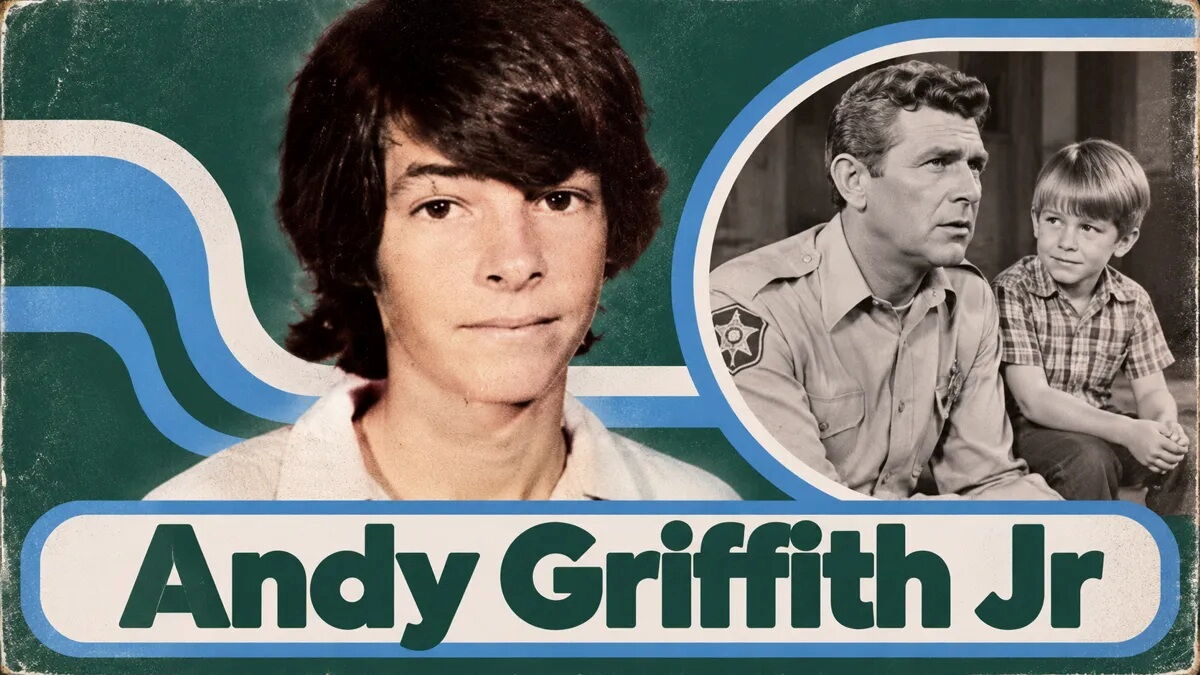
Andy Samuel “Sam” Griffith Jr. was adopted as the second of two children by actor Andy Griffith and his first wife, Barbara Bray Edwards. Sam and his sister, Dixie, were raised in a family that balanced the peaceful rhythms of North Carolina summers and the fast speed of Los Angeles. They were involved in local theatre as youths, echoing their father’s early passion of performance even though they didn’t pursue it as a career.
The exact year of Sam’s birth is recorded variably as late 1957 or 1958, a small ambiguity that lingers in public records. What’s clear is that by the time Andy Griffith’s name had become synonymous with genial Americana, Sam was a young man contending with expectations that fame can amplify but never quite soothe.
Building a Life: Real Estate and a Brief Credit on Film
Sam settled in North Hollywood and Universal City as an adult and pursued real-estate investment and development. Real estate provided consistent work in a city where dreams are built on land deals and remodels as much as screenplays. Sam was a producer on a 1995 film, but he never became famous like his father. It’s just one line in the industry ledger, but Angelenos in show business are used to being close to the marquee yet keeping their personal lives offstage.
Trouble and Headlines: The Early 1990s
The 1990s brought turmoil. In early 1992, Sam was arrested following allegations that he assaulted his then-pregnant wife. By late that year he had pleaded no contest to two misdemeanor assault counts and received probation. The headlines were stark and painful, especially given the family name. Yet the court outcomes—misdemeanor pleas, probation—tell a smaller, grimmer story than the tabloid-y glare: a private life buckling under pressure, addiction, and choices that carried real consequences.
Accounts from those years often describe long-running struggles with alcohol and drugs, the sort of dependence that frays families and isolates the person at its center. Those who knew him spoke of charm and warmth, flashes of promise, and a cycle of attempts to get better. The narrative is not unique, but in Sam’s case it was amplified by the impossibility of anonymity.
Final Years and Death
On January 17, 1996, Sam Griffith was found dead in his Universal City home. Officials reported no immediate signs of foul play and indicated that autopsy and toxicology would determine the cause. In the years since, many public retrospectives have associated his death with complications tied to alcoholism, though the specific, final coroner’s finding is not widely circulated in public archives. What remains uncontested is the sense of a life that ended too soon—another reminder that fame in the family cannot shield a person from private battles.
Family: The Famous Father, the Private Son, and a Sister’s Stewardship
The Griffith family occupies a singular space in American pop culture. Andy Griffith’s screen persona—wise, patient, decent—became a cultural touchstone. Barbara Bray Edwards, his first wife, was the quiet core of the home where Sam and Dixie grew up. For Dixie, adulthood brought a measured role as a steward of her father’s legacy, participating in tributes and memories. For Sam, the story was harder: a patchwork of work in real estate, a brief brush with film production, marriage and divorce, and the public wreckage of addiction.
In later years, narratives about the Griffith family often described Sam as distant from his father for stretches, the relationship strained amid his struggles. Yet even the most dramatic accounts carry the sense of a bond—love under strain, not absence—familiar to many families contending with addiction. The Griffith legacy is public; its pain, like most families’, was intensely private.
A Compressed Timeline
| Date | Event |
|---|---|
| c. 1957–1958 | Birth of Andrew Samuel “Sam” Griffith Jr.; adopted by Andy Griffith and Barbara Bray Edwards |
| 1970s | Youth in North Carolina–California orbit; theater involvement as a teen |
| 1980s | Real-estate work in Los Angeles area |
| January 1992 | Arrest following allegations of assaulting his pregnant wife |
| September 1992 | No-contest plea to two misdemeanor assault counts; probation imposed |
| 1995 | Listed as a producer on the film Dying Game |
| January 17, 1996 | Found deceased at home in Universal City; cause not immediately determined |
Legacy and Cultural Memory
Sam Griffith’s life is most often retold as a chapter in the broader story of Andy Griffith—a cautionary footnote beside a beloved American icon. But reducing him to a cautionary tale misses the person within: a son who worked, tried, stumbled, and at times reached for a different path. If his father embodied a television-era ideal, Sam stands in for a more modern archetype: the child of fame attempting to forge a private life, the push and pull of visibility and anonymity, the grinding cycles of addiction, and the complexity of love in a family that belonged, at least in part, to the public.
Like many who live near the spotlight’s edge, he left behind more questions than answers. His known facts fit in a table. His life does not. It’s the kind of story that reminds us how thin the line can be between myth and mess, between the town square and a quiet apartment in the Valley, between what we think we know and what a person carries alone.
Family Snapshot
| Person | Relationship to Andy Griffith Jr. | Notability |
|---|---|---|
| Andy Griffith | Adoptive father | Actor known for The Andy Griffith Show and Matlock |
| Barbara Bray Edwards | Adoptive mother | First wife of Andy Griffith |
| Dixie Griffith | Sister | Family legacy steward; public appearances tied to her father’s memory |
| Renee | Ex-wife | Marriage ended following early-1990s legal troubles |
FAQ
No; he was adopted by Andy Griffith and Barbara Bray Edwards.
Why is he often called “Sam”?
His given names were Andrew Samuel, and he commonly went by his middle name, Sam.
What did he do for a living?
He worked primarily in real-estate investment and development in the Los Angeles area.
Did he have any film industry credits?
Yes, he is listed as a producer on a 1995 film titled Dying Game.
Was he ever on The Andy Griffith Show?
No acting credits on the series are documented for him.
What legal troubles did he face?
In 1992 he was arrested after an incident involving his then-pregnant wife and later pleaded no contest to two misdemeanor assault counts, receiving probation.
How old was he at the time of his death?
He was approximately 38 years old.
What was the cause of his death?
He was found dead at home in January 1996; the immediate cause was not announced pending autopsy, and later accounts often link his death to complications of alcoholism.
Where did he live?
He lived in North Hollywood and Universal City, California.
Did he have children?
There is no reliable public record indicating that he had children.